
Preserving History with Intelligent Protection: The Pasadena Library Project Case Study

Updated: Jul 31

Located in the heart of historic Pasadena, California, the iconic Pasadena Central Library is currently ongoing through a massive, $160 million seismic retrofit and structural modernization. This extensive undertaking aims to revitalize the century-old, 100,000-square-foot building, ensuring it remains a vital community anchor for generations to come.
However, this project was left vulnerable to both internal and external risks.
Ensuring efficient operations with heavy structural demolition and concrete upgrades with the meticulous administration, refurbishment, and reinstallation of original finishes creates complex risk realities. With multiple teams executing high-impact work throughout the site, the historical Pasadena Library faces constant and overlapping hazards. A single undetected water leak, a sudden temperature spike, a hidden fire, or an unauthorized break-in that could turn into costly damage and setbacks.

Traditionally, managing a site of this scale meant relying on physical security guards, manual walkthroughs, and on-call staff. However, conventional methods of surveillance and monitoring are inherently limited, costly, and heavily dependent on luck. Which leave blind spots during critical hours of operation or after-hours.
To eliminate these risks and protect their bottom line, the project team shifted away from reactive site management. They instead deployed Latium's Unified Sensor Ecosystem.
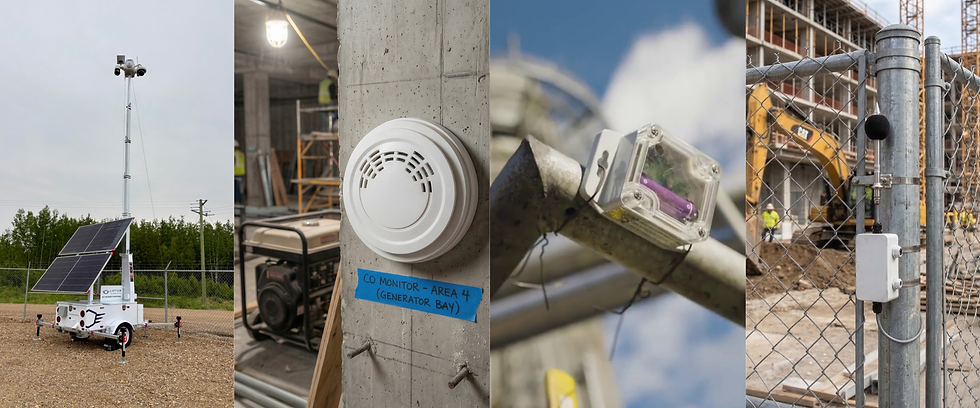
A Unified Sensor Ecosystem & Live Monitoring
Instead of treating surveillance and environmental monitoring as separate, siloed issues, the Pasadena project integrated them into a centralized, proactive risk mitigation ecosystem. Latium's smart sensors eliminated manual site checks in favor of continuous monitoring, delivering instant alerts supported by Latium's 24/7 in-house Security Operations Centre (SOC).

Environmental & Water Control
Our temperature & humidity sensors alongside our water sensors monitor the site's climate, tracking and catching temperature fluctuations as well as moisture before the can, for example, ruin historical finishes or ruin fresh concrete pours.
Early Smoke & Fire Detection
High-sensitivity smoke sensors are strategically placed across the 10,000-square-foot facility to capture undetected fire risks long before a traditional alarm would trigger.
Active Site Monitoring & Deterrence
Latium's Job Site Security Trailers keep a constant eye on the perimeter, eliminating physical blind spots and actively deterring trespassers or thieves from setting foot on the site.
Latium's Unified Sensor Ecosystem and Live Monitoring infrastructure does not just watch for problems. They create a real-time, centralized risk mitigation solution that creates total site visibility. This gives project managers full visibility across the entire job site. Instead of just recording problems after they happen, Latium provides real-time alerts so site teams can protect their equipment, avoid delays, and focus on becoming better builders.

Our 24/7 In-House Security Operations Centre
Smart sensors are only as powerful as the teams responding to it. That is where our 24/7 In-House Security Operations Centre (SOC) comes into play. It acts as the project's line of defense against outside and internal threats for the Pasadena project.
When a sensor triggers or an anomaly is detected on the perimeter, the alert does not just sit in an inbox or wake up an off-site manager hours too late. It routes in real-time for our Security Operations Centre (SOC) team for a swift and proactive incident response.
Our specialized security operators verify alerts and threats via live-video feeds, providing the project team with much needed visibility and actionable data and information for a shift to total control of its operations. Whether it is to dispatch emergency services to intercept unauthorized individuals or alerting a superintendent or on-site staff of a potentially costly water leak, the Security Operations Centre ensures an immediate and targeted response. The system automatically records, logs and archives video of every incident, making safety and regulatory compliance effortless. That means full protection for the Pasadena Project, its bottom line and its peace of mind.

Proactive Impact
The Pasadena Central Library replaced reactive security and manual checks with continuous, proactive monitoring. Helping the project team identify security and environmental risks early, allowing for a swift response before major damage or delays could occur.
Major Cost Savings
By replacing manual site inspections and physical security patrols with Latium’s Unified Sensor Ecosystem, the project drove a 66% drop in operating costs and $470,000+ in projected savings over 36 months.
Earlier Risk Detection
Instead of relying on periodic walk-throughs, the site benefits from 24/7 autonomous protection. Continuous monitoring from Latium's water, smoke, temperature, and humidity sensors catches environmental threats like pipe leaks or heat spikes the second they start, eliminating catastrophic downtime and costly rework. At the same time, automated perimeter watch keeps the entire footprint secure after hours, freeing site managers from emergency call-outs and keeping project timelines completely on schedule.
Greater Operational Efficiency
Automated alerts brought surveillance and environmental information into one centralized system. This effectively reduces routine site checks and allows the project team to respond to risks without unnecessarily interrupting operations.

Ultimately, Latium delivered a comprehensive risk mitigation strategy that redefined the Pasadena Library Project's site management. With continuous visibility across every corner of the property, the project preserved delicate historic finishes, slashed operating expenses, and minimized any potential for hazards or risks before they escalated into major setbacks. Shifting from reactive fixes to active risk prevention, Latium secured preserved capital, uninterrupted progress, and total peace of mind.


Comments